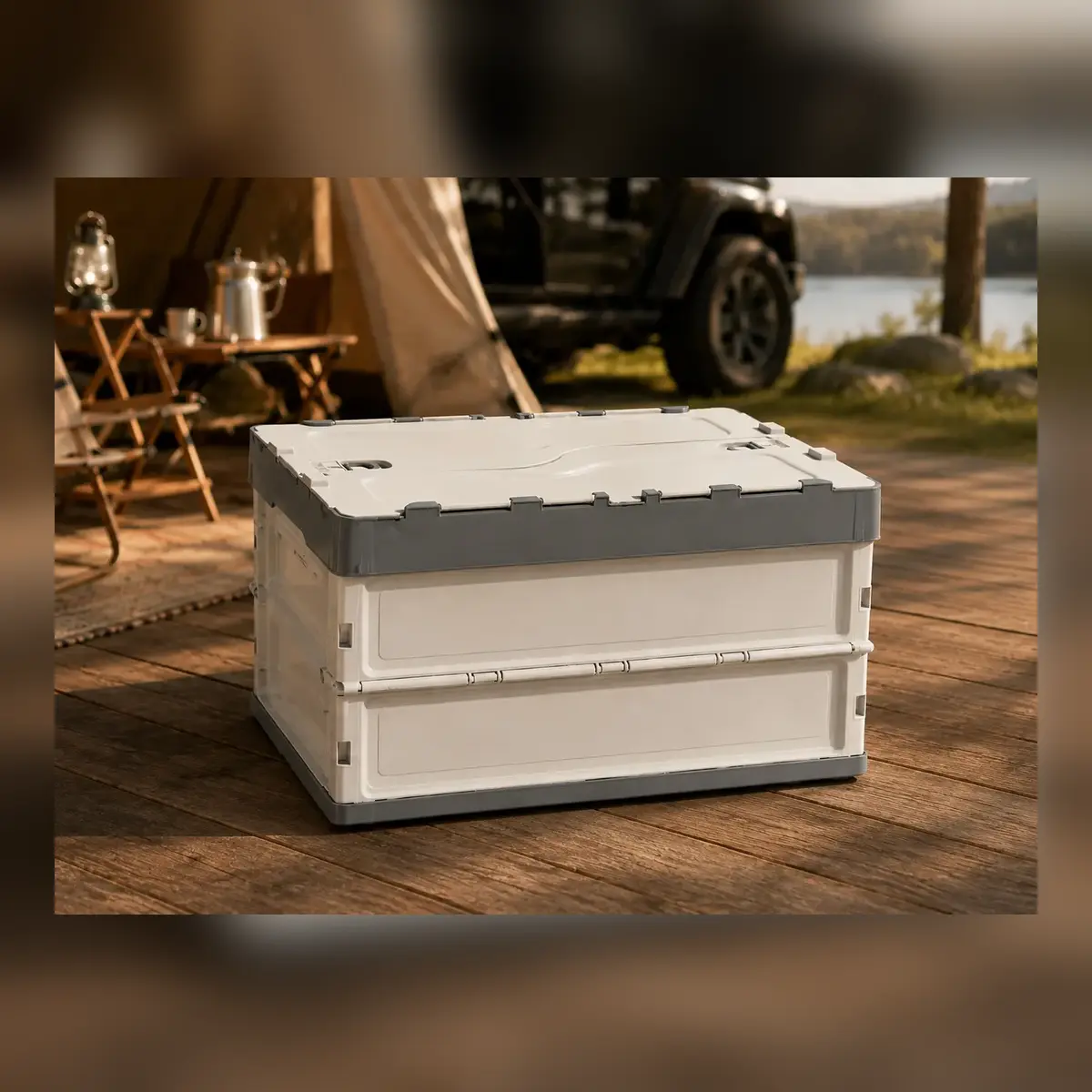
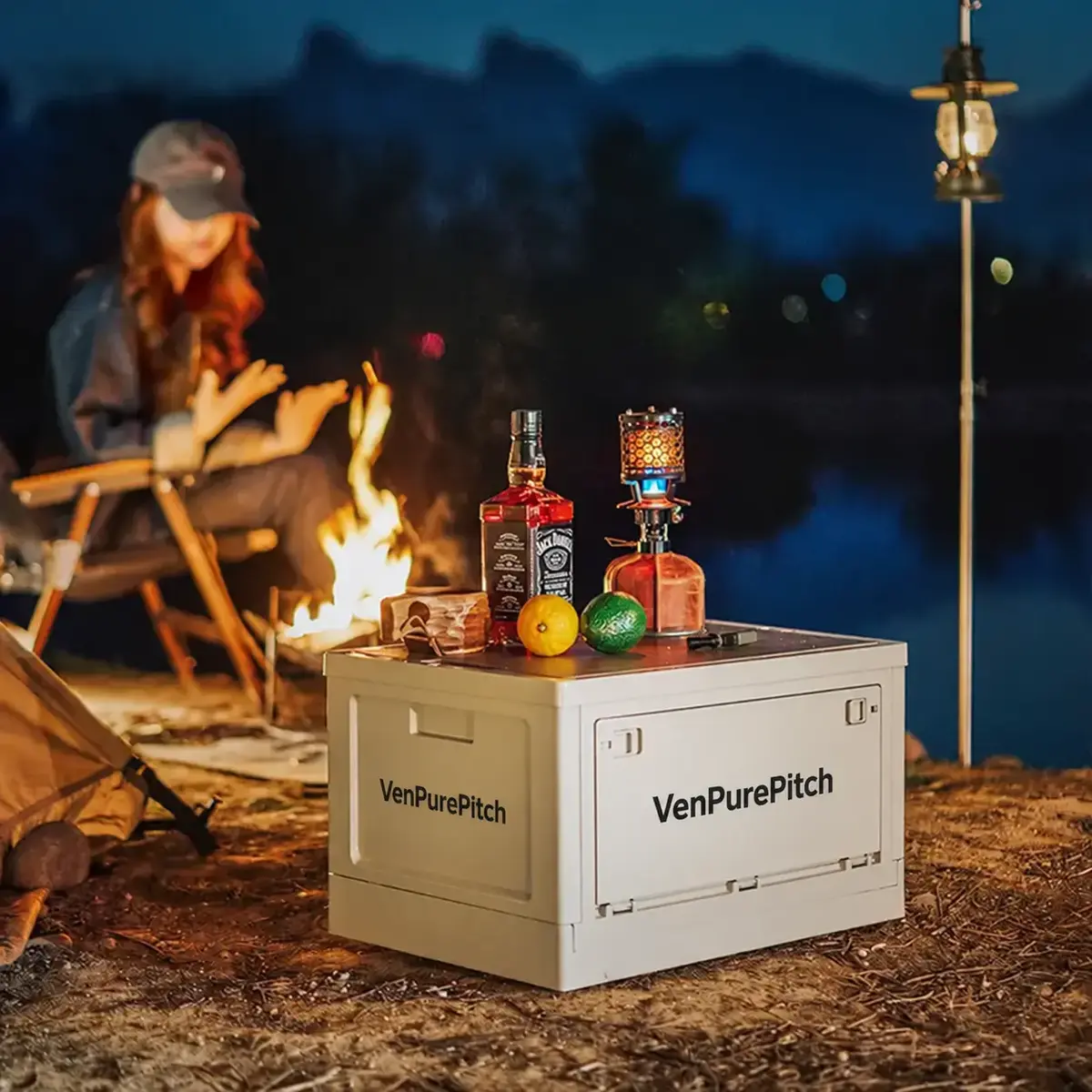
Start with the buyer's use case
For outdoor retailers, camping distributors and private-label brands, a folding storage box must work in a car trunk, RV compartment or campsite before its packing is optimized. Check usable capacity, access, folded dimensions and the approved sample. A smaller carton is not a useful saving if the chosen box no longer meets the customer's needs.
Calculate master-carton CBM per unit
Carton CBM = external carton length × width × height in metres. Divide that result by the number of saleable units in the carton. If dimensions are given in centimetres, multiply length × width × height and divide by 1,000,000. Use the final retail pack, protective inserts, lids and accessories, not the bare folded product alone.
Worked example: compare equal quantities
Illustrative example only, not a specification or savings claim for any VenPurePitch product: Packing A uses a 60 × 40 × 40 cm carton holding 4 units: 0.096 m³ per carton, or 0.024 m³ per unit. Packing B uses a 60 × 40 × 30 cm carton holding 6 units: 0.072 m³ per carton, or 0.012 m³ per unit. For 600 units, these assumptions give 14.4 m³ versus 7.2 m³ before pallets. That is 50% less carton volume in this hypothetical comparison, not a 50% reduction in the final freight bill.
Separate shipping volume from chargeable weight
For ocean LCL shipments, the forwarder's weight-or-measure basis, minimum charges and local fees affect the quotation. For FCL, container utilization matters, but loading is also constrained by internal dimensions, door clearance, payload and safe stacking. Air and courier services may use volumetric weight rules that differ from ocean freight. Ask the forwarder to quote the same route, shipment terms and packing basis for both options; do not apply a universal freight-saving percentage.
Check the pallet and container loading plan
Add pallet height, pallet tare weight, stretch wrap and any required separation to the calculation. Avoid overhang and confirm permitted stacking against the packed product's verified limits. Cartons that look efficient by CBM can leave unusable gaps on a pallet. Container capacity divided by carton CBM is only a theoretical ceiling, not a guaranteed loading quantity.
Protect the product while reducing empty space
Compare folded-box orientation, lid placement, protective inserts, retail packs and mixed-model cartons with the supplier. Check whether a changed pack makes unpacking, retail display or warehouse handling harder. Agree a packed sample and appropriate transport tests before adopting a new pack-out; do not remove protection solely to achieve a lower volume figure.
Request a comparable B2B quotation
Send the selected model, target market, intended application, quantity and branding requirements. Request final external master-carton dimensions, units per carton, net and gross weight, pallet arrangement where applicable, included accessories and packing photographs. Ask for model-specific MOQ and OEM options rather than assuming that one minimum order applies across the range.
Does a smaller folded size guarantee lower shipping cost?
No. It can enable a smaller pack, but the confirmed carton, weight, pallet layout, route, shipment mode, rate basis and fixed charges determine the actual result. Compare written forwarder quotations using identical assumptions.
Can foldable storage improve warehouse efficiency too?
It may reduce space needed for empty or packed goods, depending on the pack-out and handling process. Check shelf dimensions, carton labels, picking access and replenishment quantities. Treat any warehouse-space saving as a calculation to validate, not a universal product guarantee.
Freight references
General guidance checked on 22 October 2026. Your forwarder's quotation and the selected product's confirmed packing specification govern the actual shipment.
RELATED PRODUCTS